
Leadership in digital communities looks very different today than it did even a few years ago. The modern Chamber or professional network leader is not just an organizer — they are a connector, a facilitator, and a strategist. At ChamberedIn, we believe that great software should amplify those qualities rather than compete with them. Every feature we design begins with a single question: how can we make leadership feel more natural, not more technical?
Empowering leaders means building tools that let them focus on people, not processes. It means designing with empathy for the everyday challenges of managing members, hosting events, and fostering engagement. The philosophy behind ChamberedIn’s design is rooted in simplicity, clarity, and purpose — ensuring every action feels intuitive and every feature adds real value.
Understanding What Leaders Really Need
The first step to designing empowering features is listening carefully to what leaders actually experience. For many Chamber admins, the struggle isn’t about lacking tools — it’s about juggling too many that don’t talk to each other. Switching between spreadsheets, messaging apps, and event platforms drains time and focus.
At ChamberedIn, we learned early on that leaders need a central place where everything connects. They want a system that reflects the rhythm of their workday: check updates in the feed, review member activity, plan events, and manage growth — all without leaving the platform. This understanding has shaped everything from our General Feed to our Advanced Admin Dashboard.
By removing unnecessary complexity, leaders can focus on what they do best — nurturing relationships, guiding collaboration, and growing their community. When a Chamber leader logs in, they shouldn’t have to think about where to click next. The experience should flow naturally, just like a conversation.
Building for Simplicity Without Limiting Depth
One of the hardest parts of designing leadership tools is finding the right balance between simplicity and power. Leaders need functionality, but not at the expense of usability. We approach this by designing with layers. The first layer keeps the essentials visible and easy to access — post updates, create events, and manage members. The deeper layers are there for those who want advanced analytics, customization, or automation.
For example, the Customizable Chamber Settings feature gives admins the freedom to shape their digital environment. They can personalize layouts, adjust member permissions, or even control communication channels — all without feeling overwhelmed. Simplicity here doesn’t mean less control; it means thoughtful organization that keeps power within reach but out of the way until it’s needed.
Leaders often tell us that this kind of intuitive design changes the way they lead. When they spend less time figuring out software, they have more time to connect with members, brainstorm new ideas, and drive growth. That’s the real test of impact — not just what a feature does, but how it helps someone lead better.
Design Rooted in Real-World Contexts
Every Chamber is different. Some are regional networks of professionals, others are global organizations with multiple subgroups. Designing features that work across all these contexts requires flexibility at the core.
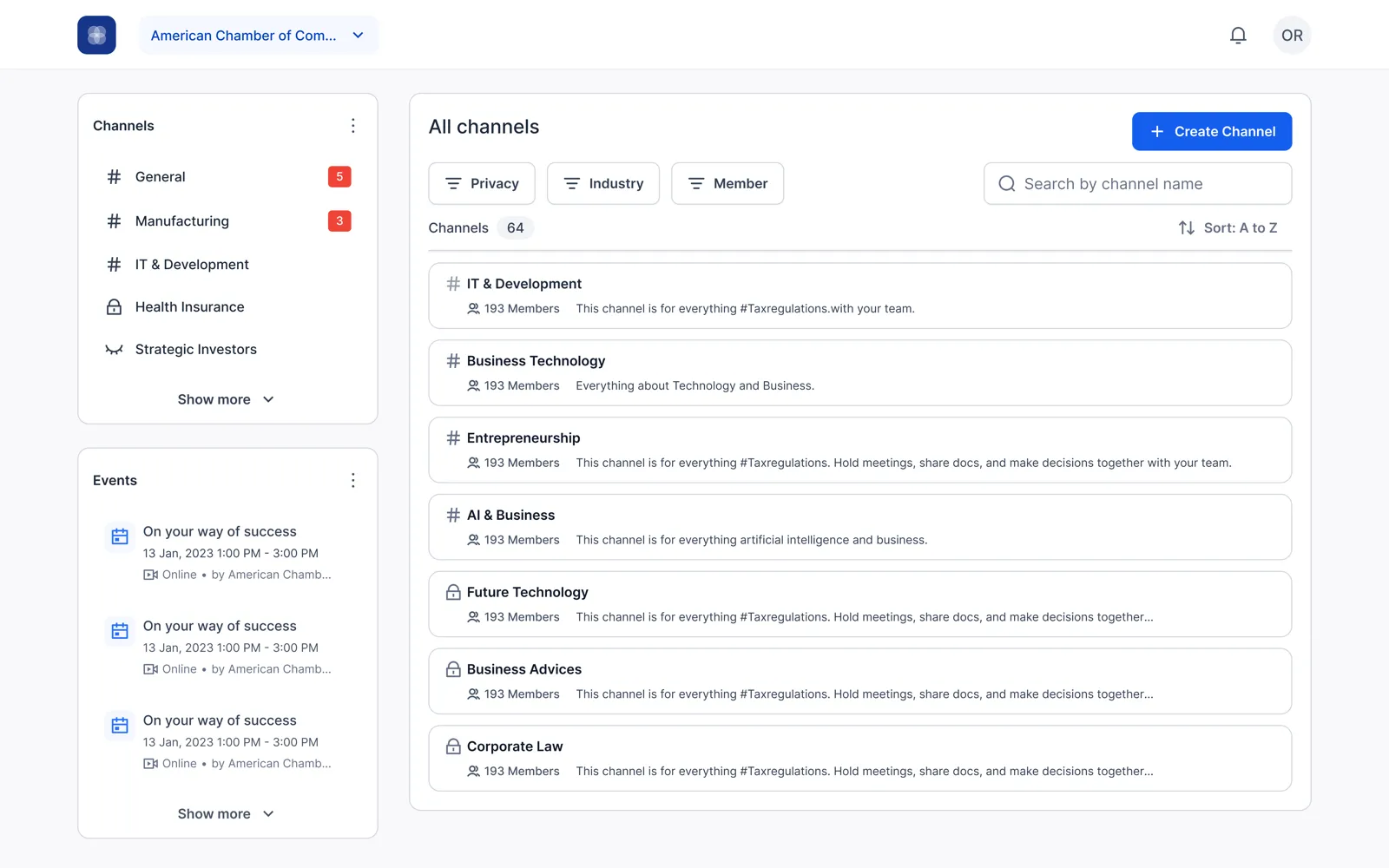
We take inspiration from how leaders organize in the real world. For example, our Channels mimic the natural way conversations happen in professional spaces — focused, topical, and dynamic. Event tools, on the other hand, mirror the real planning process — from early promotion to post-event follow-up.
This approach ensures ChamberedIn doesn’t force a structure; it adapts to one. Leaders can create environments that reflect their culture and priorities rather than adjusting to rigid software rules. The goal is always to make the digital Chamber feel like an extension of the physical one — familiar, adaptable, and people-centered.
The Role of Feedback in Continuous Design
Designing empowering features is an ongoing collaboration. ChamberedIn evolves through the stories, frustrations, and creative solutions shared by our users. Every piece of feedback — whether it’s a suggestion for a new button placement or a request for analytics visibility — becomes part of our improvement cycle.
For example, feedback from early adopters shaped the CRM Payment Processor to be both simple and flexible. Leaders wanted a way to track membership payments without switching systems. By integrating payments directly into ChamberedIn, we eliminated that friction point and made financial management part of the same workflow.
The same feedback-driven process influenced the development of In-Chamber Ads, a feature that allows leaders to open new sponsorship opportunities. It came from Chambers looking for creative, non-intrusive ways to generate revenue while giving local businesses visibility.
This cycle of listening, designing, and refining keeps ChamberedIn aligned with the reality of leadership — constantly changing, but always focused on connection.
Designing for Emotional Clarity, Not Just Technical Ease
Empowerment isn’t just about efficiency; it’s also about confidence. We design with the emotional side of leadership in mind. Many Chamber leaders wear multiple hats, balancing strategy, communication, and community management. When they open the platform, it should feel like support, not stress.
That’s why visual design and tone matter just as much as functionality. Clean interfaces, simple navigation, and warm copy all help reduce friction. The goal is to make the platform feel calm and clear — a place where leaders can think, plan, and act without distraction.
We often say that ChamberedIn should feel like a digital headquarters — organized, efficient, and inspiring. When leaders feel in control, their communities thrive.
Why Empowerment Is the Real Innovation
True innovation isn’t about adding more features. It’s about giving people the power to do more with less effort. The most impactful design choices are often invisible — a clearer workflow, a faster load time, or a dashboard that anticipates what you’ll need next.
That’s the essence of how ChamberedIn designs for empowerment. We build with intention. We focus on removing friction, clarifying purpose, and creating moments of flow. Every feature, from event scheduling to analytics tracking, is meant to serve a simple outcome: helping leaders lead.
Technology should never overshadow human connection. When done right, it strengthens it. By designing intuitive, meaningful tools, ChamberedIn helps leaders spend less time managing and more time inspiring — turning everyday operations into opportunities for growth and collaboration.
Tools That Lead by Design
At its heart, ChamberedIn is more than a platform. It’s a reflection of how leadership is evolving in a digital-first world. Great leaders empower others, and great tools empower leaders. The thought behind our design process isn’t about complexity or trend — it’s about clarity, trust, and human connection.
As we continue to refine ChamberedIn, this principle guides every decision. Whether it’s a small tweak to improve communication or a major feature that transforms how Chambers operate, the goal is always the same — to make leadership easier, more intuitive, and more impactful.
Because when technology empowers people, communities grow stronger. And when leaders have tools that truly work for them, they can spend their time on what matters most: inspiring others to do the same.